Waterford crystal value depends on the exact pattern or suite, the size of the piece, and whether it is chipped, cloudy, or unsigned. A single everyday tumbler and a large, signed centrepiece are different markets. Photograph the piece, the base, and any mark, then compare current public listings for that pattern and condition.
The app scans faster, keeps a history of your items and gives free weekly scans.
Example
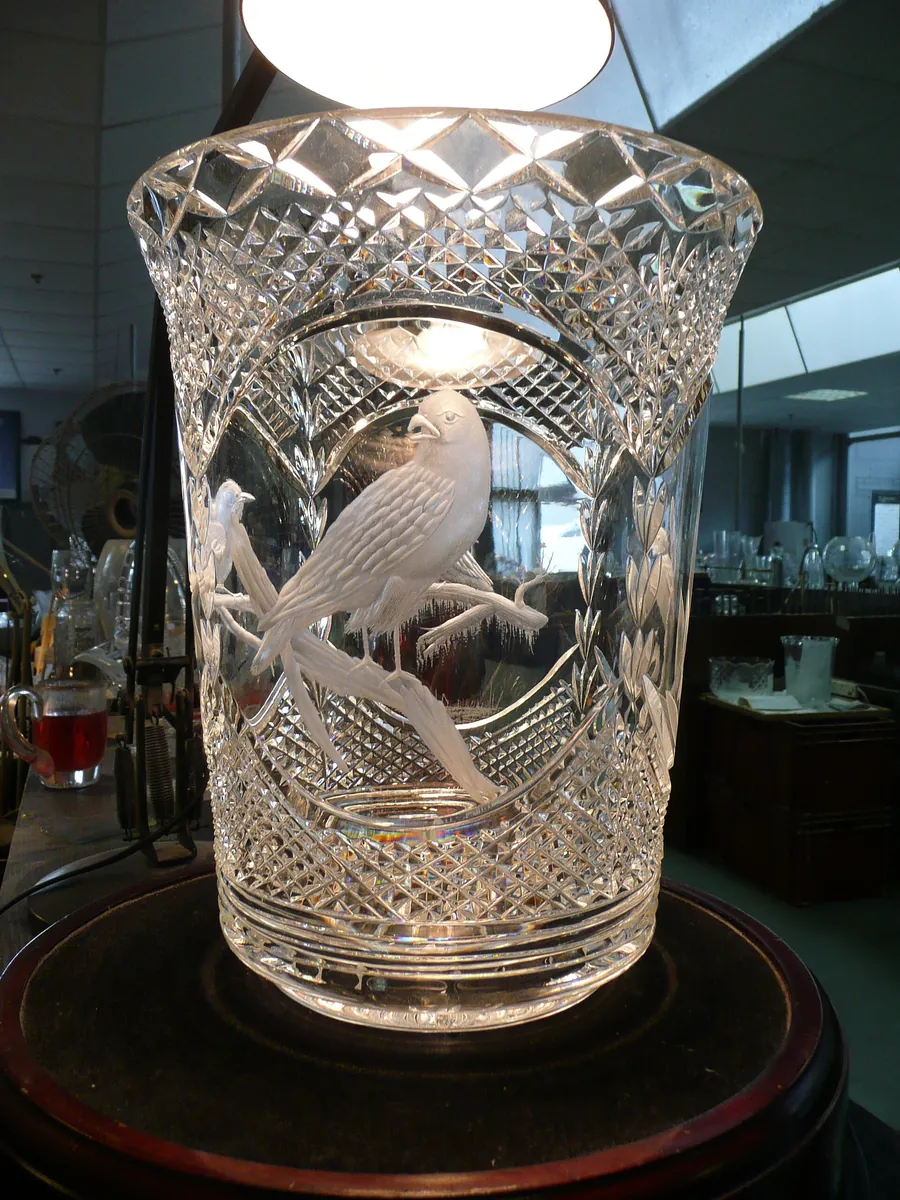
A piece of engraved Waterford crystal
Pattern, piece type, and whether the piece is signed or damaged all move the price
An engraved Waterford crystal glass. Pattern name, a seamed or marked base, and chips along the rim usually matter more than the brand word alone. Photograph the mark and any damage, and compare the pattern with a known Waterford line if you can. Photo: Waterford Crystal engraved glass.JPG by TR001, licensed under CC BY 3.0, via Wikimedia Commons. See also photo credits.

How to identify maker, pattern or period
Turn the piece over. Many later Waterford pieces carry an acid-etched "Waterford" mark on the base, sometimes with a seahorse device. The House of Waterford's note on the seahorse trademark, checked on 11 November 2026, traces that seahorse to a 1947 design discussion around Waterford city's coat of arms, with the familiar outline refined in 1986. The mark helps identification. It is not a price, and a sticker alone is weaker evidence, because a label can be moved.
Marks vary by era, and published dating charts do not always agree, so treat year ranges you see online as rough. Early pieces may have little or no acid mark. Pattern names such as Lismore are useful once you match the cut, but two suites can look similar in a soft photo. Photograph the whole piece, the cutting, and a tight shot of the base in raking light. Not sure which pattern you have? Snap a photo of the piece and the base and the app reads those details so you can confirm them.
If the piece is dinnerware or a mixed china service rather than cut crystal, use how much is my china worth.
Condition
Run a finger lightly around rims, feet, and spout edges. A chip, a fleabite, a crack, or a cloudy interior from a dishwasher will usually drop a piece out of the sharper listings. Do not grind a chip to hide it. Sets of stemware are often sold by the piece or as a run of matching glasses; a missing or mismatched glass should be mentioned. Larger giftware, lamps, and chandeliers sit in a different market from a single wine glass.
Listed versus sold
Replacement-value lists and old retail tags are not what a used glass usually sells for. Common patterns can be plentiful on the second-hand market, and asking prices often sit above a completed sale, especially once you add careful packing. We will not invent a pattern-by-pattern price list. Compare current public listings for the same pattern, size, and condition.
When we find enough listings, we show them so you can see the spread. If listings are thin, we label a rough estimate rather than inventing a precise number. See How we price.
Where to sell
People sell crystal on eBay, at local auctions, and through Facebook Marketplace or a dealer who already handles glass. The app can draft a listing for eBay, Facebook Marketplace, or Gumtree. Pack each piece on its own. Shipping a goblet is risky, so local pickup is often saner. In the UK, Ireland, Australia, or Canada, local demand for a pattern can differ from a US listing; cite the country of the comps you rely on.
Scan and list
- Photograph the whole piece, the cutting, and the mark on the base.
- Confirm the pattern or a clear description, the size, and any chips, then edit anything that looks off.
- Review the Worth about figure and the listed range when we find enough current public listings.
You can start with a free web scan in the box on this page.
Unsigned glass in a Waterford-like cut is common. Do not assume a heavy, sparkly bowl is Waterford without a mark or a firm pattern match. A scan is a first look at the piece and the mark, then at current listings, not a certificate.
The app scans faster, keeps a history of your items and gives free weekly scans.
What makes How Much Is It Worth different
One photo is enough to start, and you can add up to two more angles. We identify the item first, you confirm or correct it, then we look up a Worth about figure and a listed range from current public marketplace listings. Those are asking prices, which can sit above what a piece finally sells for. You see the listings themselves when we find enough of them.
Coins and banknotes also draw on Numista. Trading cards use PokéWallet, with a source credit where that data appears. Gold and silver use a live metal price as a floor. If listings are thin, we show a clearly labelled rough estimate rather than inventing a precise number. The app can draft a listing for eBay, Facebook Marketplace, or Gumtree once you are ready to sell. For the short version of this process, read How we price.
FAQ
How much is Waterford crystal worth?
Waterford crystal value depends on the pattern or suite, the size of the piece, and whether it is chipped, cloudy, or unsigned. A single tumbler and a large signed centrepiece are different markets. Photograph the piece and the base mark, then compare current public listings.
How do I identify a Waterford mark?
Look on the base for an acid-etched Waterford name, sometimes with a seahorse device. House of Waterford describes that seahorse trademark as a mid-twentieth-century symbol later refined in 1986. A paper sticker can be moved, so it is weaker evidence on its own. Marks vary by era, and we will not invent a dating chart.
Does a small chip ruin the value?
It usually drops the piece out of the sharper listings. Mention chips, fleabites, cracks, and dishwasher clouding honestly. Do not grind a chip to hide it before you photograph the piece.
Can I scan Waterford crystal with the app?
Yes. Photograph the piece, the cutting, and the base mark, confirm the pattern if you know it, and we will look at current public listings. If listings are thin, we label a rough estimate rather than inventing a precise number.
Related guides
Sources
- House of Waterford, “Waterford Seahorse Trademark,” House of Waterford, accessed 11 November 2026. Seahorse symbol discussed in 1947 and refined in 1986.
Waterford and Waterford Crystal are trademarks of their owners. This site and the How Much Is It Worth app are not affiliated with, endorsed by, or sponsored by Waterford. We do not claim otherwise.
Updated 11 November 2026. Written by Harris, who built How Much Is It Worth. Figures that we cite include a source and a date. They are not a certified appraisal. See How we price.
The app scans faster, keeps a history of your items and gives free weekly scans.
See all guides on the homepage, or read how we price.