A typical 1943 steel penny is a zinc-coated wartime Lincoln cent, and most worn examples are modest. 1943 steel penny value still depends on mint mark and condition. A 1943 copper cent is a scarce off-metal error and needs careful identification, not a social-media price.
The app scans faster, keeps a history of your items and gives free weekly scans.
Example
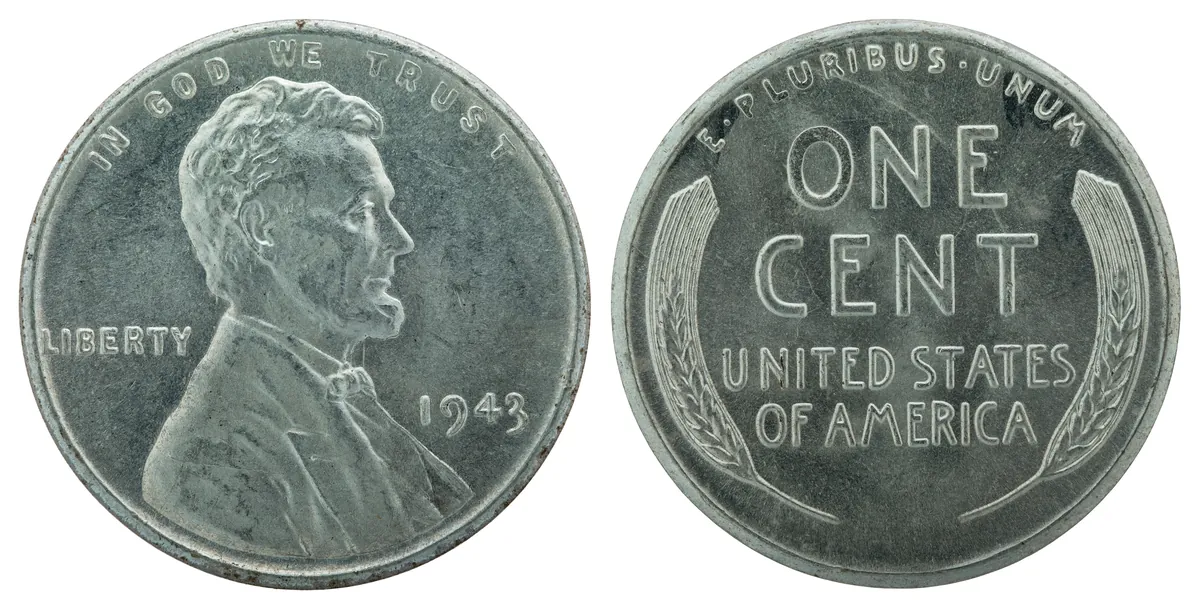
1943 steel Lincoln cent, obverse and reverse
Typical worn 1943 steel cent: about 8 to 15 cents (PCGS, 7 September 2023)
A typical 1943 Lincoln cent is zinc-coated steel, struck during a wartime copper shortage. Off-metal 1943 bronze or copper cents exist and are scarce. The PCGS range is a 2023 published comment, not a live 2026 price list, and mint mark and condition can still move a particular coin. Photograph by Jaclyn Nash, National Numismatic Collection, National Museum of American History. Coin design by the United States Mint. Public domain. Source: NNC-US-1943-1C-Lincoln Cent (wheat, zinc-coated steel).jpg. See also photo credits.

How to identify it
A typical 1943 Lincoln Wheat Cent is zinc-coated steel, made in that year because copper was needed for the war effort. It is silver-grey when it is not heavily rusted, and it is attracted to a magnet. Photograph both sides, including the date and the mint mark (none for Philadelphia, D, or S). Not sure which mint you have? Snap it and the app reads it for you.
This page is a child of the wheat penny guide, next to the 1944 wheat penny guide. A typical 1944 cent is copper, not steel. Do not price a common 1943 steel cent as if it were a copper error.
What changes the price
Mint mark and condition move a typical 1943 steel cent, and rust or pitting is common on this wartime issue. A PCGS article dated 7 September 2023 said a typical 1943 steel cent is worth about eight to fifteen cents. That article is not a live 2026 price list, and it is a typical range, not a price for every mint and grade. We do not invent a 1943 mint-by-mint chart.
Key varieties as sections, no invented prices
The variety people ask about is the 1943 bronze or copper cent, struck on a leftover copper planchet. Those coins are scarce, they are widely faked, and we will not invent a price for them. A magnet is a practical first test: a normal 1943 steel cent is attracted to a magnet, and a copper-alloy cent is not. That test does not prove a non-magnetic 1943 cent is genuine. If a 1943 cent does not stick to a magnet, get a specialist to look at it before you treat it as a rarity. Copper-plated steel fakes exist.
Melt vs collectible value
A steel cent does not have a useful silver or gold melt floor. The modest collector interest in a typical circulated 1943 steel cent is a small premium over the one-cent face value, in the range PCGS described in 2023, unless you have a carefully identified error or an unusually sharp example. Do not clean a rusty steel cent to “improve” it; cleaning usually lowers collector value.
Listed vs sold
The range we show comes from current public listings, which are asking prices. A sold price can be lower, and asking prices for “1943 copper pennies” are often wishful or wrong about the metal. When we find enough listings for a typical steel cent, we show them so you can see the spread. See How we price.
Where to sell
A typical worn 1943 steel cent is a modest sale, often as part of a wheat-penny lot or through a coin shop. A suspected copper 1943 should not go into a casual listing as a confirmed rarity. The app can draft a listing for eBay, Facebook Marketplace, or Gumtree once the identification is honest.
Scan and list
- Photograph both sides, including the date and mint mark, and note whether a magnet attracts the coin.
- Confirm that it is a 1943 steel cent, or say if you think it might be copper and needs a specialist look.
- Review the Worth about figure and the listed range when we find enough current public listings.
You can start with a free web scan in the box on this page.
The app scans faster, keeps a history of your items and gives free weekly scans.
What makes How Much Is It Worth different
One photo is enough to start, and you can add up to two more angles. We identify the item first, you confirm or correct it, then we look up a Worth about figure and a listed range from current public marketplace listings. Those are asking prices, which can sit above what a piece finally sells for. You see the listings themselves when we find enough of them.
Coins and banknotes also draw on Numista. Trading cards use PokéWallet, with a source credit where that data appears. Gold and silver use a live metal price as a floor. If listings are thin, we show a clearly labelled rough estimate rather than inventing a precise number. The app can draft a listing for eBay, Facebook Marketplace, or Gumtree once you are ready to sell. For the short version of this process, read How we price.
FAQ
How much is a 1943 steel penny worth?
A typical 1943 steel penny is a wartime Lincoln cent, and most worn examples are modest. A PCGS article dated 7 September 2023 said a typical 1943 steel cent is worth about eight to fifteen cents. That article is not a live 2026 price list. Mint mark and condition can still move a particular coin.
Is a 1943 copper penny real?
Off-metal 1943 bronze or copper cents exist and are scarce. They are also widely faked. A magnet is a first test: a normal 1943 steel cent is attracted to a magnet. If a 1943 cent does not stick, get a specialist to look at it. We will not invent a price for that error.
How is 1943 different from 1944?
A typical 1943 cent is zinc-coated steel. A typical 1944 cent is the copper alloy used in most other wheat-penny years. Do not price a common 1943 steel cent as if it were a copper error, or a common 1944 copper cent as if it were steel.
Should I clean a rusty 1943 steel cent?
No. Cleaning usually lowers collector value. Photograph both sides as they are, and mention rust or pitting honestly.
Related coin guides
Sources
- Victor Bozarth, “7 of the Most Frequently Asked Coin Questions,” PCGS, 7 September 2023. Circulated Lincoln wheat cents typically three to five cents; typical 1943 steel cents about eight to fifteen cents.
- Coin figures in the app also draw on Numista, with a source credit where that data appears.
- How the app prices items is described on How we price.
Updated 11 November 2026. Written by Harris, who built How Much Is It Worth. Figures that we cite include a source and a date. They are not a certified appraisal. See How we price.
The app scans faster, keeps a history of your items and gives free weekly scans.
See all guides on the homepage, or read how we price.