How much is my book worth depends on the edition, the printing, and the condition, especially the dust jacket, not on the title alone. A true first edition in a clean jacket is not the same listing as a later reprint or a book-club copy of the same novel. Photograph the title page, the copyright page, and the jacket, then compare current public listings.
The app scans faster, keeps a history of your items and gives free weekly scans.
Example
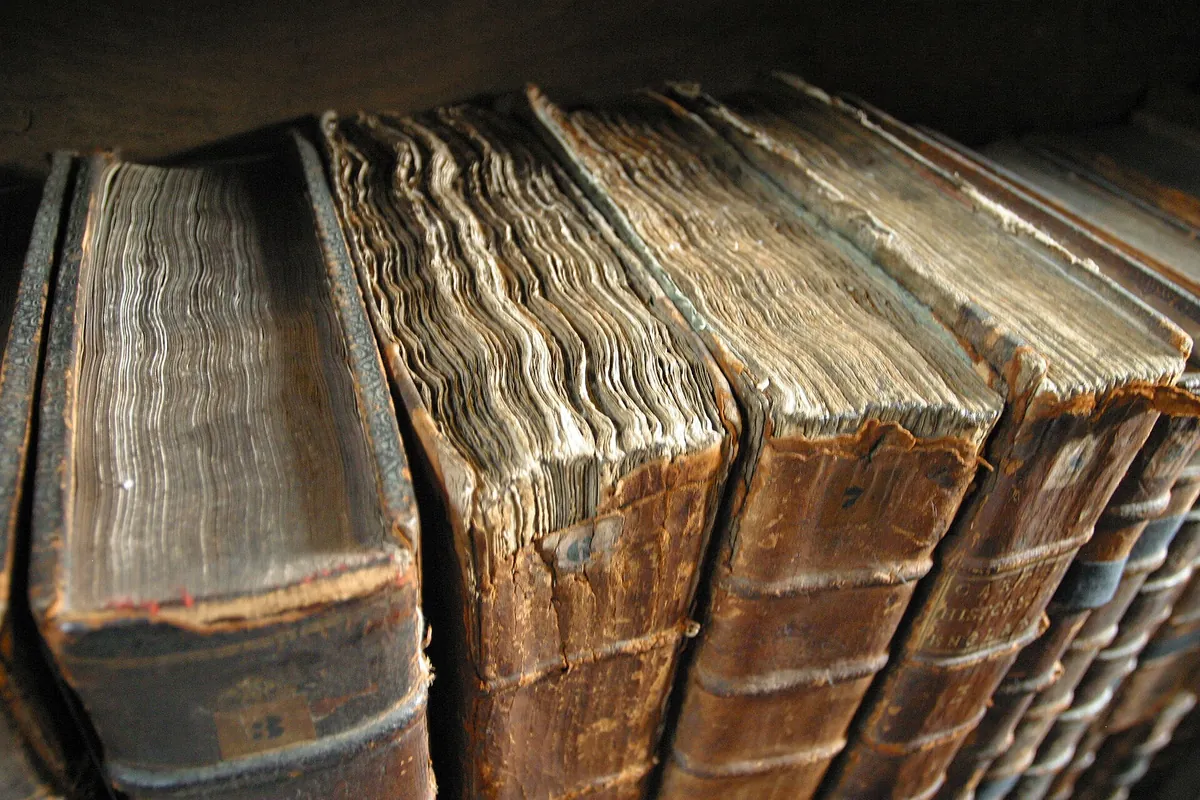
A row of old hardcover book bindings
Title, edition, printing, and condition, including the dust jacket, all move the price
A shelf of old hardcover bindings. A first edition in a jacket is not the same sale as a later reprint of the same title. Photograph the title page, the copyright page, and the jacket if you have one, and note any writing or damage. Photo: Old book bindings.jpg by Tom Murphy VII, licensed under CC BY-SA 3.0, via Wikimedia Commons. See also photo credits.

Identify title, edition and printing
Start with the title page and the copyright page, not with the cover art. You want the full title, the author, the publisher, the place and date, and any later printing statement. "First edition" on a jacket flap is a claim to check against the copyright page. Number lines, "first published" statements, and publisher-specific codes vary, so one rule does not cover every house.
An ISBN identifies a particular edition in the ISBN era, but it does not by itself tell you whether your copy is a first printing, a later impression, or a book-club issue. Photograph the dust jacket (front, spine, and flaps), the title page, the copyright page, and the binding. Not sure which printing you have? Snap those pages and the app reads them so you can start the match.
Dust jackets and book-club editions
On mid-century and later trade hardbacks, the jacket often carries a large share of the collector interest. A missing jacket, a price-clipped flap, tears, stains, or a later supplied jacket all change the listing. Do not tape a torn jacket to "tidy it up" before you photograph it.
Book-club editions are common. They may have a different board material, a missing price on the flap, a book-club blind stamp on the rear board, or a different publisher line. They are usually a different, often lower, market from the trade first. Signed copies can sit higher, but only when the signature is genuine and the edition itself is identified. A remainder mark, a library stamp, or an owner inscription should be in the description. We will not invent a price for a famous first edition here.
Condition
Binding tightness, faded spines, foxing, water damage, underlining, and a cocked spine all matter. A "reading copy" and a collector copy of the same printing should not share comps. Ex-library copies, even of sought-after titles, belong in their own comparisons. Paperbacks follow the same idea at a different scale: complete, uncreased copies and later printings are not interchangeable.
Listed versus sold
Online book-dealer asks and old catalogue figures can sit well above a recent sold price for a similar copy. When we find enough listings, we show them so you can see the spread. If listings are thin, we label a rough estimate rather than inventing a precise number. See How we price. For comic books, which use issue numbers and grades rather than printings and jackets, see how much is my comic book worth.
Where to sell
People sell ordinary used books in lots, to local shops, and on eBay or marketplace apps. Identified first editions and signed copies often do better with a specialist dealer or a book auction than in a mixed house clearance. The app can draft a listing for eBay, Facebook Marketplace, or Gumtree. Say whether the jacket is present, whether it is price-clipped, and whether the copy is a book-club or ex-library example.
Scan and list
- Photograph the jacket, title page, copyright page, and any signature, remainder mark, or damage.
- Confirm the edition and printing, and note a missing jacket or a book-club mark.
- Review the Worth about figure and the listed range when we find enough current public listings.
You can start with a free web scan in the box on this page. Later facsimiles and "first thus" reprints show up in the same searches as true firsts. A scan is a first look at the edition and at current listings, not a formal bibliographical opinion. If the book looks like an important first in a strong jacket, treat the estimate as a starting point and compare several specialist listings before you sell or insure it.
The app scans faster, keeps a history of your items and gives free weekly scans.
What makes How Much Is It Worth different
One photo is enough to start, and you can add up to two more angles. We identify the item first, you confirm or correct it, then we look up a Worth about figure and a listed range from current public marketplace listings. Those are asking prices, which can sit above what a piece finally sells for. You see the listings themselves when we find enough of them.
Coins and banknotes also draw on Numista. Trading cards use PokéWallet, with a source credit where that data appears. Gold and silver use a live metal price as a floor. If listings are thin, we show a clearly labelled rough estimate rather than inventing a precise number. The app can draft a listing for eBay, Facebook Marketplace, or Gumtree once you are ready to sell. For the short version of this process, read How we price.
FAQ
How much is my book worth?
Book value depends on the edition, the printing, and the condition, especially the dust jacket, not on the title alone. A true first edition in a clean jacket is not the same listing as a later reprint or a book-club copy. We will not invent a price for a famous first. Compare current public listings for your exact copy.
How can I tell if my book is a first edition?
Start with the title page and the copyright page, not with the jacket flap. Number lines, first-published statements, and publisher codes vary, so one rule does not cover every house. Photograph those pages and the jacket, then confirm the printing before you compare listings.
Does a missing dust jacket matter?
Often, yes, especially on mid-century and later trade hardbacks, where the jacket can carry a large share of collector interest. A missing, price-clipped, torn, or later supplied jacket should be described plainly. Do not tape a torn jacket before you photograph it.
Can I scan a book with the app?
Yes. Photograph the jacket, title page, copyright page, and any signature or damage, then confirm the edition and printing. If listings are thin, we label a rough estimate rather than inventing a precise number.
Related guides
Updated 11 November 2026. Written by Harris, who built How Much Is It Worth. Figures that we cite include a source and a date. They are not a certified appraisal. See How we price.
The app scans faster, keeps a history of your items and gives free weekly scans.
See all guides on the homepage, or read how we price.