Depression glass value depends on the colour, the pattern, and the condition, not on a memory that "pink is always expensive." Machine-made American glass from the Depression era was often inexpensive when it was new. Today collectors sort it by pattern and colour, and a chipped plate is not the same listing as a clean, complete piece in a sought-after colour. Photograph the piece, then compare current public listings.
The app scans faster, keeps a history of your items and gives free weekly scans.
Example
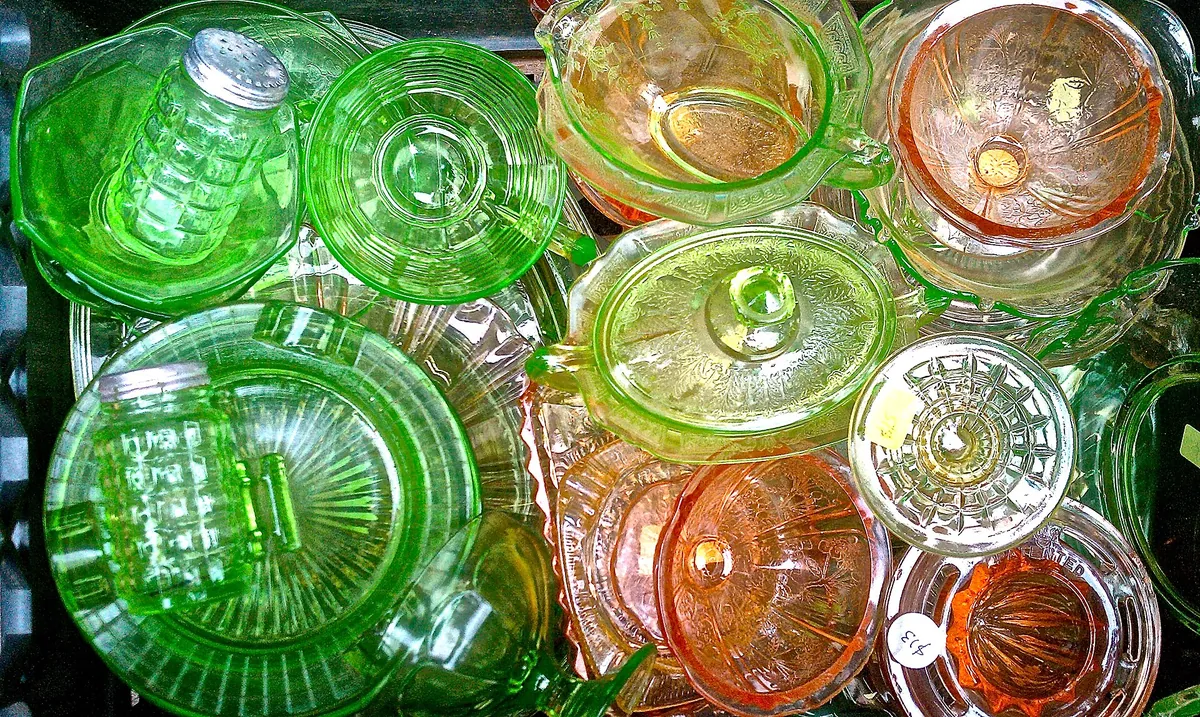
A group of green and pink Depression glass pieces
Colour, pattern, and whether a piece is chipped or complete in a set all matter
A mixed group of green and pink Depression-era machine-made glass. Pattern name, colour, and damage usually split the market more than the general label “Depression glass.” Reproductions exist, so compare the pattern with a known authentic piece if a price looks unusual. Photo: Depressionware.jpg by Lowkeyvision, licensed under CC BY-SA 3.0, via Wikimedia Commons. See also photo credits.

How to identify maker, pattern or period
Depression glass is a collector's term, not a single factory brand. It usually refers to machine-made table glass produced in large quantities in the United States during the 1920s and 1930s, often in transparent colours. Pink and green are the colours people search for most. Other colours exist too, and a colour name alone is not an identification.
Look for a pattern: the shape of the rim, the moulded motifs, and the form (plate, cup, sherbet, pitcher, candlestick). Some pieces carry a maker's mark, but many do not, so you may be matching the pattern from the shape rather than from a stamp. Photograph the whole piece, the rim, the base, and any mark, in even light. Not sure which pattern you have? Snap those photos and the app reads the glass so you can start the match.
Later reproductions and lookalike colours exist. A piece that feels wrong in weight, colour, or sharpness of the mould, or that carries a modern mark, should not be priced as a period example. We will not invent a pattern price list here.
Vintage Pyrex, as a short section
Vintage Pyrex is a different product. It is heat-resistant glassware associated with Corning, often opaque and printed, and it is not the same thing as transparent Depression-era table glass. If the dish is marked Pyrex, identify it as Pyrex and compare Pyrex listings, not a pink Depression pattern. We will not invent a Pyrex colour chart on this page. The same rule still holds: mark, pattern, and condition first, then current public listings.
Condition
Chips, flakes, cracks, and "sick" cloudy glass change the range quickly. Utensil marks, rim wear, and a heavy scratch across a plate matter more than a seller's habit of calling everything mint. A stain inside a pitcher or a bruise on a foot should be in the photo, not hidden in shadow. Repaired pieces should be described as repaired. A single damaged example from a set is not a complete set.
Listed versus sold
Pattern listicles and "value chart" posts often mix asking prices, old book figures, and a few unusually strong sales. A common plate in a common colour can sit far below a harder form in the same pattern. When we find enough listings, we show them so you can see the spread. If listings are thin, we label a rough estimate rather than inventing a precise number. See How we price. For tableware from later factories, see how much is my china worth.
Where to sell
People sell Depression glass at estate sales, in antiques malls, on eBay, and in pattern-collector groups when the identification is solid. The app can draft a listing for eBay, Facebook Marketplace, or Gumtree. Pack glass so the rims cannot knock, and say if a set is mixed or incomplete. For other household antiques, see how much is my antique worth.
Scan and list
- Photograph the piece, the rim, the base, and any maker's mark, plus a close look at chips or cloudiness.
- Confirm the colour, the form, and whether you are looking at Depression glass or at something else, such as Pyrex.
- Review the Worth about figure and the listed range when we find enough current public listings.
You can start with a free web scan in the box on this page. A scan is a first look at the pattern and at current listings, not a glass-specialist authentication. If the piece is reproduced or the pattern is only a guess, say so rather than listing it under a famous name.
The app scans faster, keeps a history of your items and gives free weekly scans.
What makes How Much Is It Worth different
One photo is enough to start, and you can add up to two more angles. We identify the item first, you confirm or correct it, then we look up a Worth about figure and a listed range from current public marketplace listings. Those are asking prices, which can sit above what a piece finally sells for. You see the listings themselves when we find enough of them.
Coins and banknotes also draw on Numista. Trading cards use PokéWallet, with a source credit where that data appears. Gold and silver use a live metal price as a floor. If listings are thin, we show a clearly labelled rough estimate rather than inventing a precise number. The app can draft a listing for eBay, Facebook Marketplace, or Gumtree once you are ready to sell. For the short version of this process, read How we price.
FAQ
How much is Depression glass worth?
Depression glass value depends on the colour, the pattern, the form, and the condition. Pink and green are commonly searched colours, but a colour name is not an identification. A chipped plate is not the same listing as a clean piece in the same pattern. We will not invent a pattern price list.
How do I identify the pattern?
Look at the shape of the rim, the moulded motifs, and the form, and photograph any maker's mark on the base. Many pieces are unmarked, so you may be matching the pattern from the shape. Snap a photo and the app can start that match from the glass itself.
Is vintage Pyrex the same as Depression glass?
No. Vintage Pyrex is heat-resistant glassware associated with Corning, often opaque and printed. It is a short, separate identification on this page, not a Depression-glass colour. If the dish is marked Pyrex, compare Pyrex listings, not a pink Depression pattern.
Can I scan Depression glass with the app?
Yes. Photograph the piece, the rim, the base, and any chips or cloudiness, then confirm the colour and form. If listings are thin, we label a rough estimate rather than inventing a precise number.
Related guides
Updated 11 November 2026. Written by Harris, who built How Much Is It Worth. Figures that we cite include a source and a date. They are not a certified appraisal. See How we price.
The app scans faster, keeps a history of your items and gives free weekly scans.
See all guides on the homepage, or read how we price.