How much is a silver quarter worth? A circulating United States quarter is always worth at least twenty-five cents, but quarters dated 1964 and earlier are 90 percent silver. NGC's melt-value table, updated 10 November 2026 at 6:30 p.m. Eastern, listed $9.33 for those silver quarters (0.1808 troy ounces of silver).
The app scans faster, keeps a history of your items and gives free weekly scans.
Example · 10 Nov 2026
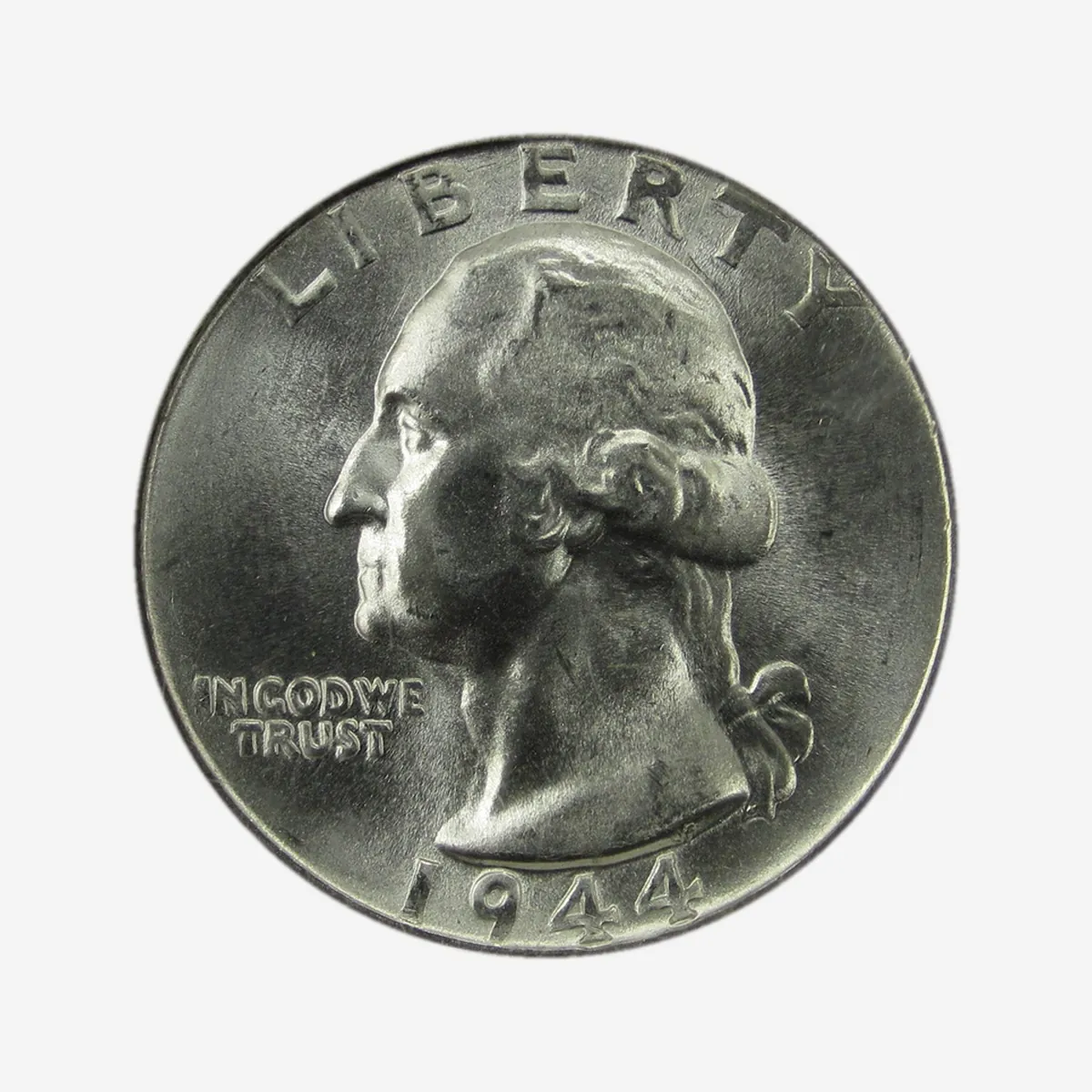
1944-S Washington silver quarter, obverse
Pre-1965 silver quarter melt $9.33 (NGC, 10 November 2026)
Circulating United States quarters dated 1964 and earlier are 90 percent silver (0.1808 troy ounces). Most worn 1965 and later clad circulation strikes stay close to face value, unless you have a proof, a silver collector issue, a key date, or a documented error. The NGC figure is a melt value, not a live quote. Photograph by Brandon Grossardt. Coin design by John Flanagan. Public domain. Source: Washington Quarter Silver 1944S Obverse.png. See also photo credits.

Every circulating United States quarter is worth at least twenty-five cents in face value. The date is the first fork in the road: quarters dated 1964 and earlier were struck in 90 percent silver, and those have a metal value well above face. Most 1965 and later circulation strikes are copper-nickel clad and, in ordinary worn condition, stay close to twenty-five cents.
The United States Mint states that silver was removed from the quarter in 1965. Current circulating quarters are cupro-nickel clad (8.33 percent nickel, balance copper) and weigh 5.670 grams, with a face value of 25 cents. That official change in composition is why a 1964 Washington quarter and a 1965 Washington quarter should not be priced as if they were the same coin.
Silver quarters, and the melt floor
Washington quarters dated 1932 through 1964, along with earlier Barber and Standing Liberty quarters in the same 90 percent silver standard, contain 0.1808 troy ounces of silver, according to NGC's published melt-value table. NGC updated that table on 10 November 2026 at 6:30 p.m. Eastern, with a silver ask of $51.63, and listed a melt value of $9.33 for those 90 percent silver quarters.
Melt is a floor, not a ceiling. A heavily worn common-date silver quarter often trades near that metal value. Sharper coins, scarcer dates, and coins with collector demand can sit above melt. We are not inventing a “typical shop price” on top of the NGC figure. If you want a current selling picture for the exact date and condition in your hand, identify the coin and compare recent listings, or scan it with the app.
Two early Washington dates, 1932-D and 1932-S, are widely treated as the key dates of the circulating series. We are not publishing made-up prices for them here. If you have one, check a current specialist guide and recent listings, and consider a professional opinion before a high-stakes sale.
Clad circulation quarters after 1964
Most quarters dated 1965 and later that you find in change are clad circulation strikes. In ordinary worn condition they are usually worth face value. That includes the common bicentennial issues dated 1776-1976, the 50 State and America the Beautiful designs, and later circulating commemorative reverses, unless you have a proof, a silver collector strike, or a documented error.
The Mint has also sold silver proof and silver collector versions of some of those designs. Those were not the same product as a worn clad coin from circulation. If the coin came in official packaging, or if it is a proof with mirror fields, do not price it off a till-worn clad example. Confirm the finish and the composition first.
Errors and varieties exist in the clad era too, from off-centre strikes to doubled dies and wrong-planchet coins. They are the exception, not the rule. If something looks clearly wrong in the striking, photograph it carefully and compare it with documented varieties rather than assuming a high price.
A quick way to sort silver from clad
Date is the first test: 1964 and earlier is the 90 percent silver circulating standard for these quarters; 1965 and later circulating strikes are clad. You can also look at the edge. A silver quarter is silver-coloured all the way through. A clad quarter shows a copper-coloured band between two silver-coloured layers.
Do not clean a quarter to make the date easier to read. Cleaning usually lowers collector value. Photograph both sides in even light, including the date, mint mark, and the edge if you are checking composition. Then use the scan box on this page. Coin figures in the app draw on Numista as well as current public listings, and a live metal price is used as a floor for gold and silver.
If you are sorting a jar, pull anything dated 1964 or earlier, then look more closely at early 1930s mint marks and at anything that looks like a proof or an error. For nickels and dimes in the same jar, see how much is a nickel worth and how much is a dime worth. The wider process sits on how much is my coin worth.
Silver versus clad, in brief
| Coin | What the sources say |
|---|---|
| 1964 and earlier circulating 90% silver quarters | NGC melt $9.33 on 10 November 2026. Melt is a floor. Scarcer dates such as 1932-D and 1932-S can sit above it; we do not invent those prices. |
| 1965 and later clad circulation strikes, including most 1776-1976 bicentennial quarters from change | Usually face value in ordinary worn condition, unless you have a proof, a silver collector issue, or a documented error. |
Selling, fakes, and other countries
A coin shop or a bullion dealer will often price common worn silver close to melt. Collector dates may do better with a specialist. Asking prices on public listings can sit above a sale. Altered mint marks exist on early Washington quarters, so get a professional opinion if a lot of money is at stake.
These are United States coins. Cited melt figures are in US dollars from NGC. If you are in the UK, Australia, or Canada, a scan can still help you identify the coin and look at public listings. The app can draft a listing for eBay, Facebook Marketplace, or Gumtree.
The app scans faster, keeps a history of your items and gives free weekly scans.
What makes How Much Is It Worth different
One photo is enough to start, and you can add up to two more angles. We identify the item first, you confirm or correct it, then we look up a Worth about figure and a listed range from current public marketplace listings. Those are asking prices, which can sit above what a piece finally sells for. You see the listings themselves when we find enough of them.
Coins and banknotes also draw on Numista. Trading cards use PokéWallet, with a source credit where that data appears. Gold and silver use a live metal price as a floor. If listings are thin, we show a clearly labelled rough estimate rather than inventing a precise number. The app can draft a listing for eBay, Facebook Marketplace, or Gumtree once you are ready to sell. For the short version of this process, read How we price.
FAQ
How much is my quarter worth?
Every circulating United States quarter is worth at least twenty-five cents. Quarters dated 1964 and earlier are 90 percent silver. NGC's melt-value table, updated 10 November 2026, listed $9.33 for those silver quarters (0.1808 troy ounces of silver). Most worn 1965 and later clad circulation strikes stay close to face value, unless you have a proof, a silver collector issue, a key date, or a documented error.
How can I tell a silver quarter from a clad one?
Start with the date: 1964 and earlier circulating quarters are 90 percent silver; 1965 and later circulating strikes are clad. A silver quarter is silver-coloured through the edge. A clad quarter shows a copper-coloured band between two lighter layers. The United States Mint removed silver from the quarter in 1965.
Is a 1965 quarter or a 1976 bicentennial quarter silver?
A typical 1965 circulation quarter and a typical 1776-1976 bicentennial quarter from change are clad, not the 90 percent silver standard used through 1964. Some later silver proof or silver collector versions exist and should be identified separately, usually from official packaging or a proof finish, not assumed from a worn coin in a jar.
Can I scan a quarter with the app?
Yes. Photograph both sides, including the date, mint mark, and the edge if you are checking composition. Confirm the identification, then we look up a range. Coin figures draw on Numista and current listings, and a live metal price is used as a floor for silver.
Related coin and money guides
Sources
- United States Mint, Quarter (circulating coin) and coin specifications: silver removed from the quarter in 1965; current clad quarter 8.33% nickel, balance copper, 5.670 g, face value 25 cents. Accessed 11 November 2026.
- NGC, Coin Melt Values, updated 10 November 2026 at 6:30 p.m. Eastern. Silver ask $51.63; 90% silver quarter (0.1808 troy oz) melt $9.33.
Updated 11 November 2026. Written by Harris, who built How Much Is It Worth. Figures that we cite include a source and a date. They are not a certified appraisal. See How we price.
The app scans faster, keeps a history of your items and gives free weekly scans.
See all guides on the homepage, or read how we price.