Roseville pottery value depends on the pattern, the glaze, the form, and the condition, not on a pattern name overheard at a boot sale. Marks help, but damage and later reproductions change the listing you should compare. Photograph the piece and the base, then use current public listings for that exact pattern and shape.
The app scans faster, keeps a history of your items and gives free weekly scans.
Example
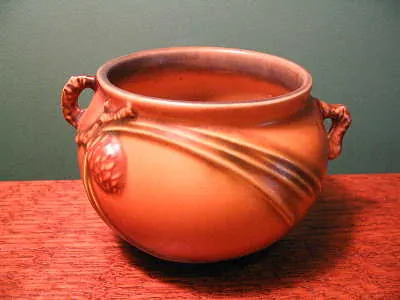
A Roseville Pottery Pine Cone bowl
Line, shape, colour, and condition, including hairlines, all move the price
A Roseville Pine Cone bowl, one of the factory's best-known lines. The incised mark, the exact shape, and any chips or repairs matter. Reproductions of popular Roseville lines exist, so compare the mark and the glaze with a known authentic piece if a price looks unusual. Photo: Roseville pinecone.jpg by Kafziel, licensed under CC BY-SA 3.0, via Wikimedia Commons. See also photo credits.

How to identify maker, pattern or period
Roseville was an American art pottery company. Collectors sort the work by pattern name, glaze colour, and form (vase, bowl, jardiniere, wall pocket, and so on). The same pattern can exist in more than one colour and in many shapes, so a pattern name alone is not a price.
Turn the piece over. Later Roseville often carries a raised or impressed "Roseville" mark, sometimes with "U.S.A." and a shape number. Earlier marks and paper labels vary, and some genuine pieces have a faint or worn mark. Photograph the whole form, the glaze, any handles or relief, and a clear shot of the base. Not sure which pattern you have? Snap those photos and the app reads the pottery so you can start the match.
Reproductions and lookalikes are a real problem in this field. A sharp new-looking mark, an odd weight, a muddy or harsh glaze, or a shape that does not sit right against known examples should slow you down. We will not invent a pattern-by-pattern price list. Identify first, then compare listings, and treat a specialist opinion as worthwhile when the piece looks important.
Condition
Hairline cracks, professionally hidden repairs, chips on rims and handles, and bruises on high-relief leaves or flowers all move the range. Hold the piece in good light and look along the rim and the handles. A dried flower vase that has sat with water in it can have staining or mineral deposit inside. A repair under later overpaint is still a repair. Missing flower frogs, lids, or stands should be mentioned, because a complete form is not the same as the pot alone.
Listed versus sold
Old book values and dealer "retail" tags can sit above what a similar damaged or common-colour example actually brought. A clean, harder pattern in a desirable glaze is not a comp for a hairline example in a common colour. When we find enough listings, we show them so you can see the spread. If listings are thin, we label a rough estimate rather than inventing a precise number. See How we price. For other ceramics, see how much is my china worth.
Where to sell
People sell Roseville through pottery dealers, auction houses, antiques malls, and eBay. The app can draft a listing for eBay, Facebook Marketplace, or Gumtree. Say if you can see a hairline or a repair, and do not boil or aggressively polish a piece before you photograph it. For other older household pieces, see how much is my antique worth.
Scan and list
- Photograph the form, the glaze, and a clear view of the base mark and any damage.
- Confirm the pattern and shape, and note chips, hairlines, repairs, or missing parts.
- Review the Worth about figure and the listed range when we find enough current public listings.
You can start with a free web scan in the box on this page. A scan is a first look at the pattern and at current listings, not a pottery authentication. If the mark is suspicious or the glaze looks off, say so, and compare the piece with known genuine examples before you treat a high asking price as real.
The app scans faster, keeps a history of your items and gives free weekly scans.
What makes How Much Is It Worth different
One photo is enough to start, and you can add up to two more angles. We identify the item first, you confirm or correct it, then we look up a Worth about figure and a listed range from current public marketplace listings. Those are asking prices, which can sit above what a piece finally sells for. You see the listings themselves when we find enough of them.
Coins and banknotes also draw on Numista. Trading cards use PokéWallet, with a source credit where that data appears. Gold and silver use a live metal price as a floor. If listings are thin, we show a clearly labelled rough estimate rather than inventing a precise number. The app can draft a listing for eBay, Facebook Marketplace, or Gumtree once you are ready to sell. For the short version of this process, read How we price.
FAQ
How much is Roseville pottery worth?
Roseville pottery value depends on the pattern, the glaze, the form, and the condition. The same pattern can exist in more than one colour and in many shapes, so a pattern name is not a price. We will not invent a pattern chart. Compare current public listings for the exact shape and glaze.
How do I identify a piece of Roseville?
Turn the piece over. Later Roseville often carries a Roseville mark, sometimes with U.S.A. and a shape number. Earlier marks and paper labels vary. Photograph the form, the glaze, and the base. Reproductions exist, so a sharp new-looking mark should slow you down.
Does damage matter?
Yes. Hairlines, hidden repairs, chips on rims and handles, and bruises on high-relief decoration all change the range. A complete form with its lid or stand is not the same as the pot alone. Describe repairs plainly.
Can I scan Roseville pottery with the app?
Yes. Photograph the form, the glaze, and a clear view of the base mark and any damage, then confirm the pattern. If the mark looks suspicious, say so rather than listing the piece under a famous pattern name.
Related guides
Roseville is used here to describe pottery people bring us to identify. This site and the How Much Is It Worth app are not affiliated with, endorsed by, or sponsored by any current owner of the Roseville name. We do not claim otherwise.
Updated 11 November 2026. Written by Harris, who built How Much Is It Worth. Figures that we cite include a source and a date. They are not a certified appraisal. See How we price.
The app scans faster, keeps a history of your items and gives free weekly scans.
See all guides on the homepage, or read how we price.