Baseball card value depends on the exact year, set, player and condition, and on whether the card is raw or graded. Many cards from the late 1980s and early 1990s sell for very little. A photo compared with recent sold listings is the fairest first check.
The app scans faster, keeps a history of your items and gives free weekly scans.
Example
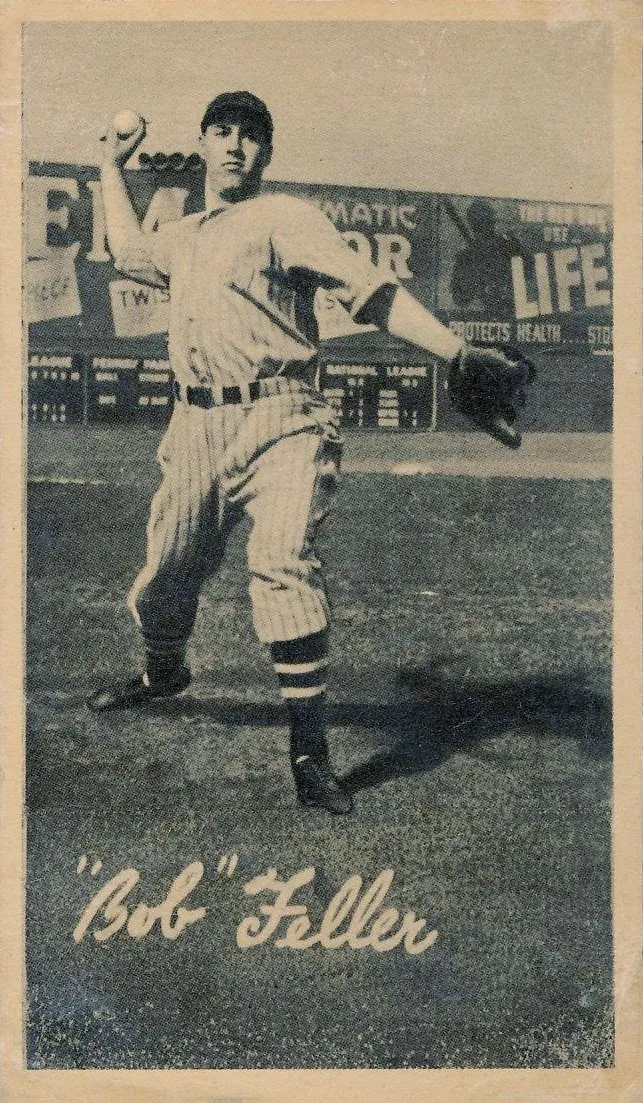
1936 Goudey Bob Feller baseball card
Set, player, and condition, including whether the card is graded, all split the market
A 1936 Goudey Bob Feller baseball card. Pre-war cards like this are in the public domain, and they follow the same identification idea as later sets: the exact issue, player, and condition matter. A raw card and a graded card are different sales. 1936 Goudey Bob Feller baseball card. Public domain. Source: 1936 Goudey Bob Feller.jpg. See also photo credits.

How to identify year, set, number and player
Start with the year, the set name, the card number, and the player, not with a famous surname alone. Those details are usually on the back, along with copyright and set marks from makers such as Topps, Bowman, or Upper Deck. Photograph the front and the back, and crop tightly so the text is readable. A 1950s card and a 1990s card of a well-known player are not the same market, even if the name is the same.
If the card is in a graded slab, photograph the label as well as the card. The grade and the cert number are part of the identification. Not sure which set you have? Snap a photo and the app reads it for you.
Raw vs graded
A raw card and a professionally graded card should be compared separately. A high grade can sit in a different listing set from a raw copy with soft corners or surface wear. Grading costs money and is not always worth it, especially on a common card. Do not assume a slab is genuine; compare the label with the grader's usual style if a price looks out of line.
Junk-wax years vs older cards
Many baseball cards from the late 1980s and early 1990s were printed in very large numbers. That era is often called junk wax. Common cards from those years often sell for very little, even when the player is well known. Older, scarcer issues and true short prints are a different market. The year and the set tell you which side you are on more honestly than a "most valuable cards" list.
Rookie cards as a section, with examples not as separate celebrity URLs
Rookie cards are collected more than later-year cards of the same player, but only when you have the right set and the right issue. People search names such as Mickey Mantle or Nolan Ryan because those cards are famous. We will not invent prices for those cards, and this page is not a celebrity price list. If you have a card like that, identify the exact year, set, and number, then compare recent listings for that exact issue and condition. A reprint, a later-year card, or a damaged copy is not the headline example you saw online.
Listed vs sold
The range we show comes from current public listings, which are asking prices. A sold price can be lower, and on common cards it often is. When we find enough listings, we show them so you can see the spread. If listings are thin, we label a rough estimate rather than inventing a precise number.
Where to sell
People sell sports cards on eBay, specialist dealers, local card shops, and shows. The app can draft a listing for eBay, Facebook Marketplace, or Gumtree. A shop may pay less than a patient private sale. For a single modest card, local listing or a shop can be simpler than a long auction.
Altered cards
Trimmed edges, pressed creases, colour touch-up, and counterfeit slabs show up in this hobby. If a card looks unusually sharp for its age, or a grade looks too good, get a specialist opinion before you pay or sell on the strength of a single photo. Do not try to "improve" a card for the camera.
Scan and list
- Photograph the front and back, and the slab label if the card is graded.
- Confirm the year, set, number, and player, and whether the card is raw or graded.
- Review the Worth about figure and the listed range when we find enough current public listings. See How we price.
You can start with a free web scan in the box on this page.
On a modern card, the year and set are often printed on the back or in a small line on the front. On an older card, the design itself may be the only clue, so a sharp photo of both sides matters even more. A rookie card is a specific issue, not a later reprint or a card that merely shows a player early in a career, and two rookies of the same player from different sets are different markets. We will not invent a player-by-player chart or turn famous names into their own pages here. Identify the card in your hand, then look at current public listings for that year, set, number, and grade.
The app scans faster, keeps a history of your items and gives free weekly scans.
What makes How Much Is It Worth different
One photo is enough to start, and you can add up to two more angles. We identify the item first, you confirm or correct it, then we look up a Worth about figure and a listed range from current public marketplace listings. Those are asking prices, which can sit above what a piece finally sells for. You see the listings themselves when we find enough of them.
Coins and banknotes also draw on Numista. Trading cards use PokéWallet, with a source credit where that data appears. Gold and silver use a live metal price as a floor. If listings are thin, we show a clearly labelled rough estimate rather than inventing a precise number. The app can draft a listing for eBay, Facebook Marketplace, or Gumtree once you are ready to sell. For the short version of this process, read How we price.
FAQ
How much is a baseball card worth?
It depends on the exact year, set, player, and condition, and on whether the card is raw or graded. Many cards from the late 1980s and early 1990s sell for very little. A photo compared with current public listings for that exact card is the fairest first check.
Are 1980s and 1990s baseball cards valuable?
A large share of junk-wax cards from those years are common and sell for modest amounts, sometimes only a small amount over the cost of selling them. A scarce insert, a true rookie, or a high-grade copy can be a different market. Identify the card before you assume a premium.
Does a graded baseball card sell for more than a raw card?
Often yes, but only when you compare the same card in the same set. A high grade sits in a different listing set from a raw, worn copy. Confirm whether your card is raw or in a slab before you trust a range.
Can I scan a baseball card with the app?
Yes. Photograph the front and back so the year, set, and number are readable, confirm the identification, and we will look at current public listings. Trading card prices also use PokéWallet for supported card games, with a source credit where that data appears.
Related card guides
Sources
- Trading card prices in the app use PokéWallet for supported card games, shown with a source credit where that data appears, and current public listings. See How we price.
Updated 11 November 2026. Written by Harris, who built How Much Is It Worth. Figures that we cite include a source and a date. They are not a certified appraisal. See How we price.
The app scans faster, keeps a history of your items and gives free weekly scans.
See all guides on the homepage, or read how we price.