
Beanie Baby value
Most are modest sellers today. Tags, fill, and condition matter more than a viral asking price.
The app scans faster, keeps a history of your items and gives free weekly scans.
Collectibles price guides only work when you identify the exact item and condition. Use the guide that matches what you have, or snap a photo to check yours free.
Example
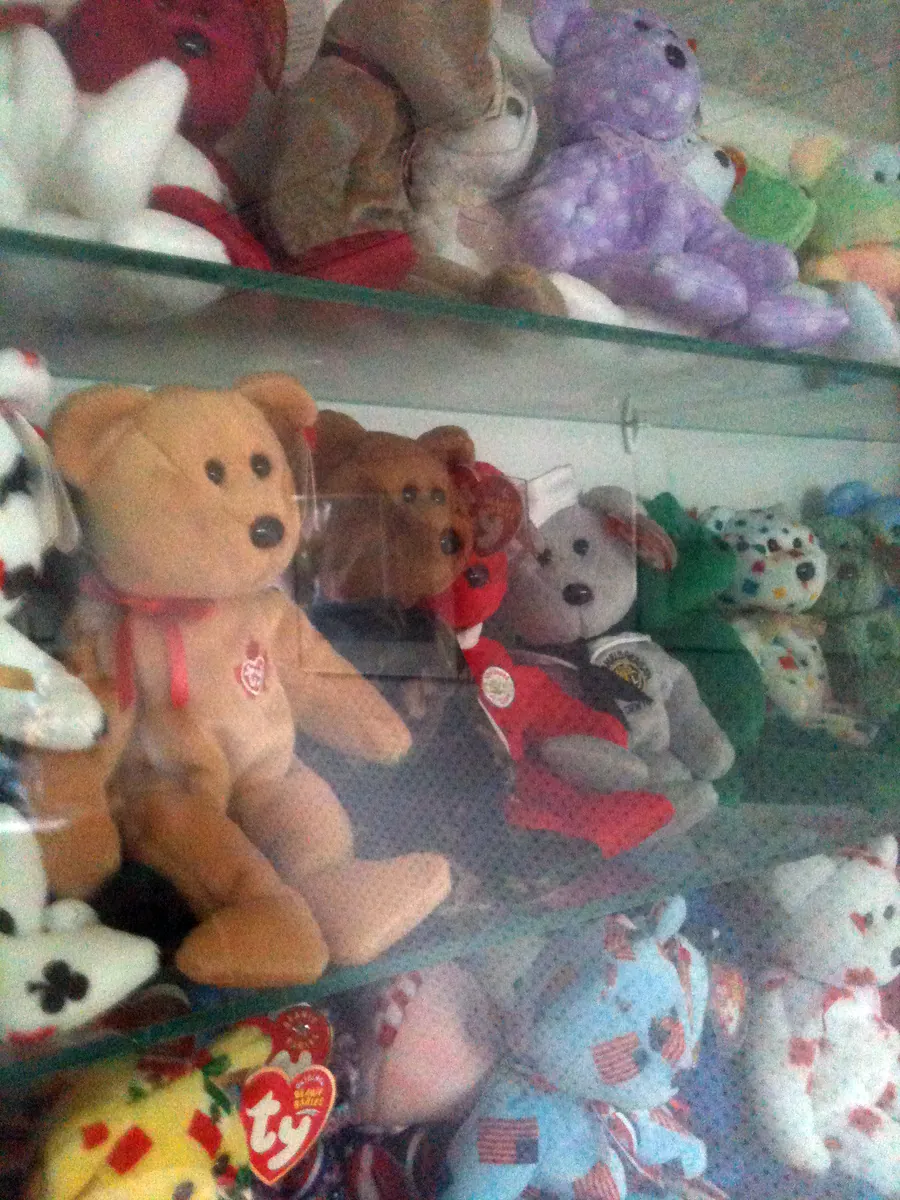
Completeness, tags, and condition usually matter more than a viral asking price
A cabinet of Ty Beanie Baby bears, reused from the Beanie Baby value guide as a collectibles example. Toys, watches, stamps, comics, and other finds are priced by the exact item and condition, not by a category name alone. Photo: Mom's Beanies (9120344523).jpg by daryl_mitchell, licensed under CC BY-SA 2.0, via Wikimedia Commons. See also photo credits.
Collectibles are messy to price from a name alone. A Beanie Baby with both tags is not the same toy as a loose plaything. A Funko Pop with a sharp box and an exclusive sticker is not the same sale as a loose common Pop. A watch with papers is not the same as a watch that does not run. A mint stamp and a used one sit in different markets. A painting or print you might sell is priced by maker, original versus reproduction, and whether comparable listings exist, which is not the classroom meaning of art value. The guides below tell you what to photograph so the identification is honest.
Online asking prices can be optimistic. That is especially true for toys that had a 1990s hype cycle. We look at current public listings and show a range when we find enough of them. If listings are thin, we label a rough estimate rather than inventing a precise figure. Completeness, tags, packaging, and condition usually matter more than a viral headline.
Where you sell depends on the object: a local pickup may be right for furniture, while a watch or a comic may travel. The app can draft a listing for eBay, Facebook Marketplace, or Gumtree. These guides are practical first looks, not formal appraisals for insurance.
Most are modest sellers today. Tags, fill, and condition matter more than a viral asking price.
Number, exclusive sticker, and box condition first. Common shared Pops often sell for less than retail.
Photograph the dial and case back, and note whether it runs.
A mint forever stamp is usually postage. Collectible issues need the identification first.
Title, issue, and grade drive the range. Photograph the cover and the indicia.
Model, colourway, size, and whether the pair is deadstock or worn, plus the box if you still have it.
Pressing, runout marks, and separate grades for the disc and the sleeve, not just the album title.
Exact model, whether a lens is included, and whether the camera still works.
Maker, style, size, and condition, plus whether a buyer has to collect it locally.
Maker, pattern, whether the set is complete, and whether pieces are chipped or crazed.
Exact character and series, box and cards, and current listings rather than last year's peak asks.
Set number first, then whether the box is sealed and whether a used copy is complete.
Maker, movement, whether the case is solid gold or gold-filled, and whether the watch runs.
Pattern, size, and condition, plus a base mark if there is one. Chips change the listing.
Authenticity first, then the exact model and the condition of corners, hardware, and lining.
What the item is, what is being claimed, and whether that claim can be supported. A COA is not proof on its own.
Paintings, prints, and posters you might sell, with comps when they exist and a labelled estimate when they do not.
Year, face mould, marks, and whether the box and clothes survive come first, then current public listings.
The exact casting, wheels, and whether the car is still on its card change the listings you should compare.
Colour, pattern, and condition come first. Vintage Pyrex is a separate identification, not a Depression-glass colour.
Pattern, glaze, form, and condition, with a careful look at the base mark and at later reproductions.
Identify the piece first from marks and construction, then compare current listings. Age alone is not a price.
Edition, printing, and dust-jacket condition change the listing more than the title alone.
Brand, model, serial, and originality matter more than a remembered shop-ticket price.
The app scans faster, keeps a history of your items and gives free weekly scans.
One photo is enough to start, and you can add up to two more angles. We identify the item first, you confirm or correct it, then we look up a Worth about figure and a listed range from current public marketplace listings. Those are asking prices, which can sit above what a piece finally sells for. You see the listings themselves when we find enough of them.
Coins and banknotes also draw on Numista. Trading cards use PokéWallet, with a source credit where that data appears. Gold and silver use a live metal price as a floor. If listings are thin, we show a clearly labelled rough estimate rather than inventing a precise number. The app can draft a listing for eBay, Facebook Marketplace, or Gumtree once you are ready to sell. For the short version of this process, read How we price.
They cover toys and other finds people often want to price, including Beanie Babies, Funko Pops, watches, stamps, comics, sneakers, vinyl, cameras, furniture, and china. Each guide explains what to photograph and what usually moves the price.
Yes. Start with Scan it online free on this page or on a guide, confirm the identification, and we will look at current public listings. If listings are thin, we say so instead of inventing a precise number.
An asking price is not a sale. For Beanie Babies in particular, spectacular listings are often wishful. Tags, completeness, and condition matter more than a headline number.
The iPhone app is on the App Store. The Android app is coming soon. You can also scan it online free on this site, one scan per day per connection.
You can also read How we price or start from the homepage.
Updated 11 November 2026. Written by Harris, who built How Much Is It Worth. Figures that we cite include a source and a date. They are not a certified appraisal. See How we price.
The app scans faster, keeps a history of your items and gives free weekly scans.