How much is a dime worth? A circulating United States dime is worth at least ten cents. Dimes dated 1964 and earlier are 90 percent silver. NGC's melt-value table, updated 10 November 2026 at 6:30 p.m. Eastern, listed $3.73 for those silver dimes (0.0723 troy ounces of silver).
The app scans faster, keeps a history of your items and gives free weekly scans.
Example · 10 Nov 2026
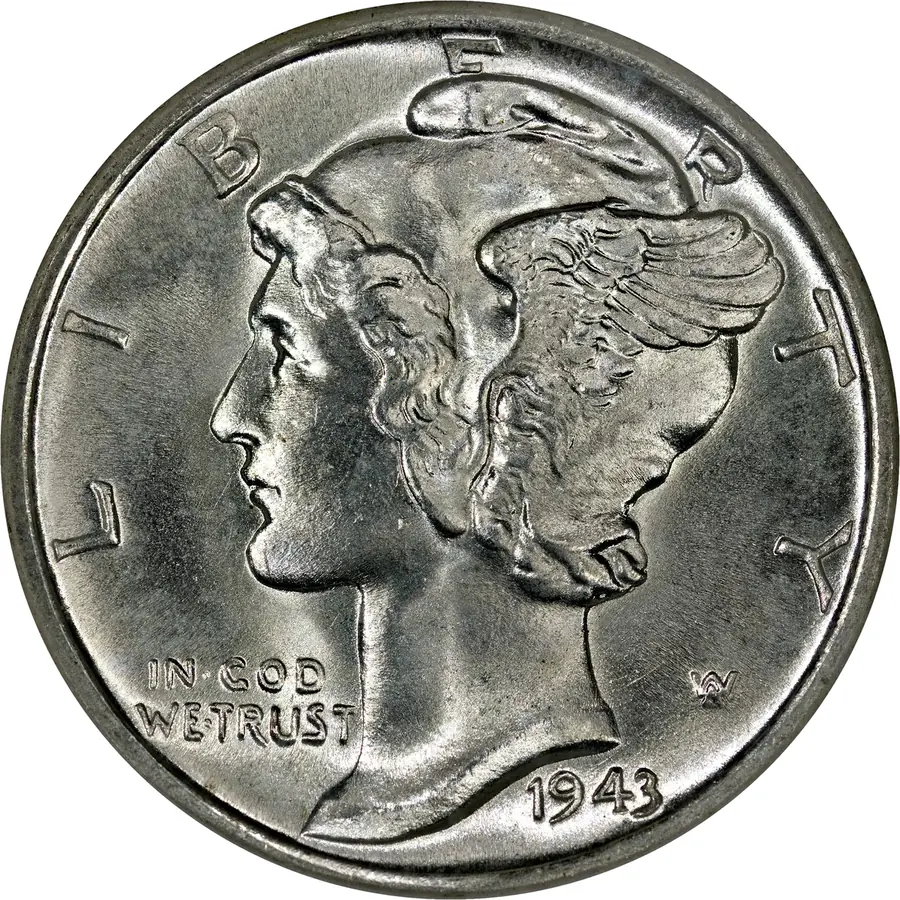
1943-D Mercury dime, 90 percent silver
Silver dime melt $3.73 (NGC, 10 November 2026)
United States dimes dated 1964 and earlier are 90 percent silver (0.0723 troy ounces). A 1943-D Mercury dime is one of those silver issues. Most worn 1965 and later clad Roosevelt dimes stay close to face value. The NGC figure is a melt value, not a collector price, and not a live quote. Photograph by BrandonBigheart. Coin design by Adolph Weinman. Public domain (US Mint design). Source: 1943D Mercury Dime obverse-cutout.png. See also photo credits.

A circulating United States dime is worth at least ten cents in face value. As with quarters, the date decides whether you are holding a silver coin or a copper-nickel clad coin. Dimes dated 1964 and earlier were struck in 90 percent silver. Most 1965 and later circulation strikes stay close to ten cents in ordinary worn condition.
The United States Mint lists the current circulating dime as a 10-cent coin, 2.268 grams, in cupro-nickel clad (8.33 percent nickel, balance copper). The Mint removed silver from circulating dimes in 1965, in the same composition change that affected the quarter. A 1964 Roosevelt dime and a 1965 Roosevelt dime should not be priced as if they were the same coin.
Silver dimes, and the melt floor
Mercury dimes (1916 through 1945) and Roosevelt dimes dated 1946 through 1964, along with Barber dimes in the same 90 percent silver standard, contain 0.0723 troy ounces of silver, according to NGC's published melt-value table. NGC updated that table on 10 November 2026 at 6:30 p.m. Eastern, with a silver ask of $51.63, and listed a melt value of $3.73 for those 90 percent silver dimes.
Melt is a floor, not a ceiling. A heavily worn common-date silver dime often trades near that metal value. Sharper coins, scarcer dates, and strong collector demand can sit above melt. We are not inventing a typical shop premium on top of the NGC figure. If you want a current selling picture for the exact date and condition in your hand, identify the coin and compare recent listings, or scan it with the app.
The 1916-D Mercury dime is a well-known scarce date in that series. We are not publishing a made-up price for it here. If you have a 1916 dime, read the mint mark carefully (it sits on the reverse, to the left of the fasces on a Mercury dime) and check a current specialist guide plus recent listings. Because it is famous, it is also a frequent target for added mint marks. If a lot of money is at stake, get a professional opinion.
Clad Roosevelt dimes after 1964
Most dimes dated 1965 and later that you find in change are clad circulation strikes. In ordinary worn condition they are usually worth face value. Proofs and silver collector strikes, sold in official sets rather than released as pocket change, should be identified separately and not priced off a till-worn clad dime.
Errors and varieties exist, including off-centre strikes and doubled dies, but they are the exception. If the striking looks clearly wrong, photograph it well and compare it with documented varieties rather than assuming a high price.
How to sort silver from clad
Date is the first test: 1964 and earlier is the 90 percent silver circulating standard for these dimes; 1965 and later circulating strikes are clad. The edge is a second check. A silver dime is silver-coloured through the edge. A clad dime shows a copper-coloured band between two lighter layers. Silver dimes of this standard also weigh 2.50 grams, which is a little heavier than the 2.268-gram clad dime listed by the Mint, but a clear date and a look at the edge are usually enough when you are sorting a jar.
Do not clean a dime to make the date easier to read. Cleaning usually lowers collector value. Photograph both sides in even light, including the date, mint mark, and the edge if you are checking composition. Then use the scan box on this page. Coin figures in the app draw on Numista as well as current public listings, and a live metal price is used as a floor for gold and silver.
When you sort change, pull anything dated 1964 or earlier, then look more closely at early Mercury dates and mint marks and at anything that looks like a proof or an error. For the other silver-era coins often found in the same jar, see how much is my quarter worth and how much is a nickel worth, including wartime silver nickels. The wider process sits on how much is my coin worth.
Silver versus clad, in brief
| Coin | What the sources say |
|---|---|
| 1964 and earlier 90% silver dimes (Barber, Mercury, and early Roosevelt) | NGC melt $3.73 on 10 November 2026. The 1916-D Mercury dime is a well-known scarce date; we do not invent a price for it. |
| 1965 and later clad circulation Roosevelt dimes | Usually face value in ordinary worn condition, unless you have a proof, a collector issue, or a documented error. |
A coin shop or bullion dealer will often price common worn silver close to melt. Asking prices can sit above a sale. Added mint marks show up on famous scarce dates, so get a professional opinion if a large sum is at stake. Cited figures are in US dollars. The app can draft a listing for eBay, Facebook Marketplace, or Gumtree.
The app scans faster, keeps a history of your items and gives free weekly scans.
What makes How Much Is It Worth different
One photo is enough to start, and you can add up to two more angles. We identify the item first, you confirm or correct it, then we look up a Worth about figure and a listed range from current public marketplace listings. Those are asking prices, which can sit above what a piece finally sells for. You see the listings themselves when we find enough of them.
Coins and banknotes also draw on Numista. Trading cards use PokéWallet, with a source credit where that data appears. Gold and silver use a live metal price as a floor. If listings are thin, we show a clearly labelled rough estimate rather than inventing a precise number. The app can draft a listing for eBay, Facebook Marketplace, or Gumtree once you are ready to sell. For the short version of this process, read How we price.
FAQ
How much is a dime worth?
A circulating United States dime is worth at least ten cents. Dimes dated 1964 and earlier are 90 percent silver. NGC's melt-value table, updated 10 November 2026, listed $3.73 for those silver dimes (0.0723 troy ounces of silver). Most worn 1965 and later clad Roosevelt dimes stay close to face value unless they are proofs, collector issues, key dates, or documented errors.
How can I tell a silver dime from a clad one?
Start with the date: 1964 and earlier circulating dimes are 90 percent silver; 1965 and later circulating strikes are clad. A silver dime is silver-coloured through the edge. A clad dime shows a copper-coloured band. The Mint removed silver from circulating dimes in 1965.
Is the 1916-D Mercury dime valuable?
It is a well-known scarce date, but we do not publish a made-up price for it here. If you have a 1916 dime, read the mint mark carefully and check a current specialist guide and recent listings. Because the date is famous, added mint marks are a known problem, so get a professional opinion if a lot of money is at stake.
Can I scan a dime with the app?
Yes. Photograph both sides, including the date, mint mark, and the edge if you are checking composition. Confirm the identification, then we look up a range. Coin figures draw on Numista and current listings, and a live metal price is used as a floor for silver.
Related coin and money guides
Sources
- United States Mint, Dime (circulating coin) and coin specifications: silver removed from circulating dimes in 1965; current clad dime 8.33% nickel, balance copper, 2.268 g, face value 10 cents. Accessed 11 November 2026.
- NGC, Coin Melt Values, updated 10 November 2026 at 6:30 p.m. Eastern. Silver ask $51.63; 90% silver dime (0.0723 troy oz) melt $3.73.
Updated 11 November 2026. Written by Harris, who built How Much Is It Worth. Figures that we cite include a source and a date. They are not a certified appraisal. See How we price.
The app scans faster, keeps a history of your items and gives free weekly scans.
See all guides on the homepage, or read how we price.