Sports card value depends on the exact year, set, player and condition, and on whether the card is raw or graded. A baseball, football or basketball card should not share one number just because they are all “sports cards.” Photograph the front and back, then compare current public listings for that exact card.
The app scans faster, keeps a history of your items and gives free weekly scans.
Example
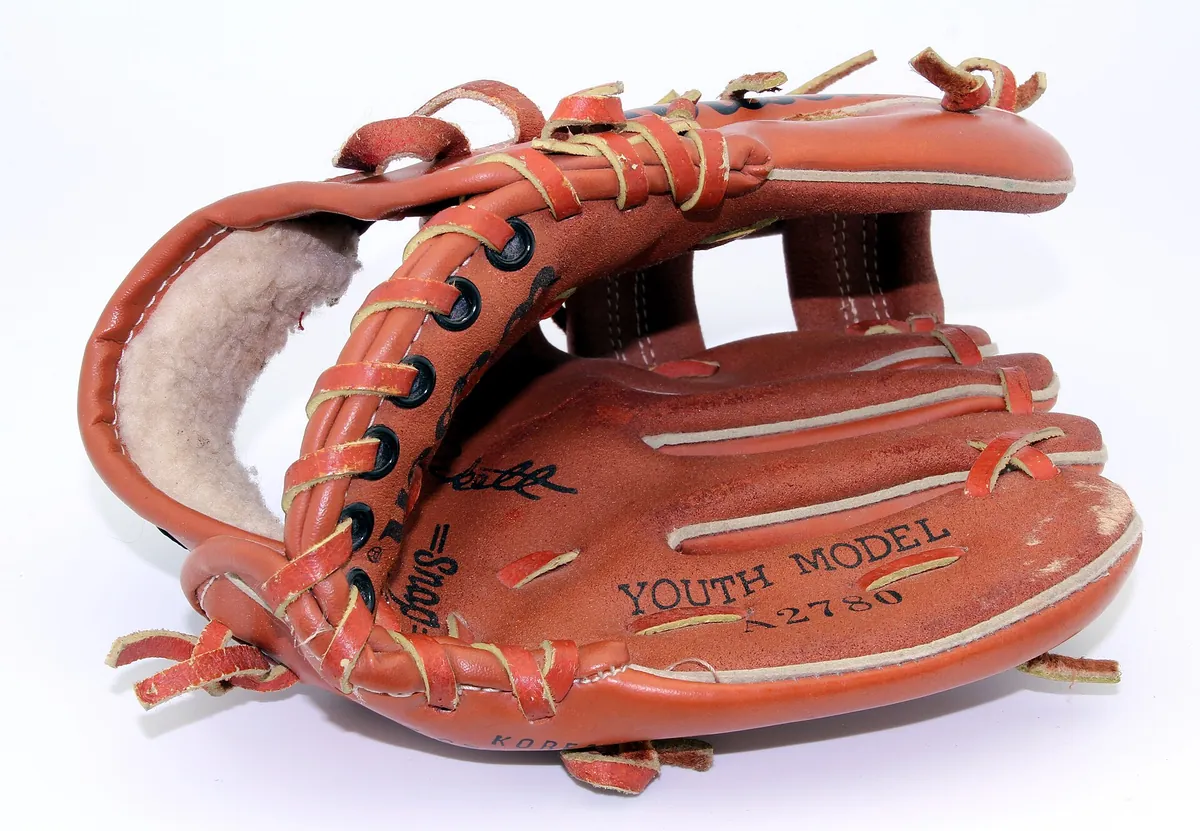
A Wilson baseball glove
The exact item, provenance, and condition, including whether a signature is authenticated, all move the price
A Wilson baseball glove, used here as a sports memorabilia example. Game-used or authenticated signed pieces sit in a different market from an unsigned retail glove. Photograph any labels, signatures, or certificates, and say what you actually know about the item's history. Photo: Gant de baseball Wilson 6.jpg by Lionel Allorge, licensed under CC BY-SA 3.0, via Wikimedia Commons. See also photo credits.

How to identify year and set
Start with the sport, then the year, the set name, the card number, and the player. Those details are what stop two cards that look similar in a soft photo from being treated as one market. On a modern card, the year and set are often printed on the back or in a small line on the front. On an older card, the design itself may be the only clue, so both sides matter. Not sure which set you have? Snap it and the app reads it for you.
This page is the starting point for sports cards. For a deeper look at one sport, use the baseball card guide, the football card guide, or the basketball card guide. Rookie cards, inserts, and parallels are specific issues, not a later reprint or a card that merely shows a player early in a career.
Raw vs graded
A professionally graded slab and a raw card are different listing sets, even when the year, set, and player match. Corners, edges, surface wear, and centering move a raw card. A high grade can sit well above a worn raw copy, and a low grade is not automatically better than a sharp raw card. Confirm whether your card is raw or graded before you trust a range.
Do not clean a card to improve a photo, and do not press a bent card flat. Altered cards, trimmed edges, and recoloring are a known problem on older and high-value pieces. A photo is a first look, not a laboratory authentication.
Listed vs sold
Price-guide databases and forum threads can be useful after you know the exact card, but they are not a substitute for current listings of the copy in your hand. The range we show comes from current public listings, which are asking prices. A sold price can be lower. Trading card prices in the app also use PokéWallet for supported card games, shown with a source credit where that data appears. When we find enough listings, we show them so you can see the spread. If listings are thin, we label a rough estimate rather than inventing a precise number.
Where to sell
People sell sports cards through specialist card shops, local card events, and public marketplaces. The app can draft a listing for eBay, Facebook Marketplace, or Gumtree. A shop may pay less than a hopeful asking price and may be faster. Collectors trade worldwide, so listings may be in US dollars or in another currency.
Scan and list
- Photograph the front and back so the year, set, number, and player are readable.
- Confirm the identification, including whether the card is raw or graded.
- Review the Worth about figure and the listed range when we find enough current public listings. See How we price.
You can start with a free web scan in the box on this page.
The app scans faster, keeps a history of your items and gives free weekly scans.
What makes How Much Is It Worth different
One photo is enough to start, and you can add up to two more angles. We identify the item first, you confirm or correct it, then we look up a Worth about figure and a listed range from current public marketplace listings. Those are asking prices, which can sit above what a piece finally sells for. You see the listings themselves when we find enough of them.
Coins and banknotes also draw on Numista. Trading cards use PokéWallet, with a source credit where that data appears. Gold and silver use a live metal price as a floor. If listings are thin, we show a clearly labelled rough estimate rather than inventing a precise number. The app can draft a listing for eBay, Facebook Marketplace, or Gumtree once you are ready to sell. For the short version of this process, read How we price.
FAQ
How much is sports memorabilia worth?
Sports memorabilia value depends on what the item actually is, the claim being made, and whether that claim can be supported. A replica jersey, a weakly certified autograph, and a well-documented piece are different markets. Photograph the item and any proof, then compare current public listings.
How do I tell if a signed item is authentic?
A certificate of authenticity is not proof on its own. Forged items often arrive with a printed COA. Prefer a clear chain of provenance and, for autographs, a recognised authenticator whose work you can check in a public database. The FBI has warned collectors about fake sports memorabilia, including in the 2005 Operation Bullpen case.
Does a certificate always mean it will sell well?
No. Buyers look at the quality of the proof, the player or event, and the condition of the object. A generic certificate can do very little. We will not invent a price for an item we cannot support.
Can I scan sports memorabilia with the app?
Yes. Photograph the item, any tags, the signature, and both sides of any certificate or hologram, then confirm what is actually being claimed. We look at current public listings. A scan is not a handwriting report.
Related guides
Sources
- Federal Bureau of Investigation, “Operation Bullpen Slam Dunks Sports/Celebrity Memorabilia Fraud,” FBI, 22 July 2005, and later FBI consumer warnings on fake sports memorabilia. A certificate of authenticity is not, on its own, proof that a signed item is genuine.
Updated 11 November 2026. Written by Harris, who built How Much Is It Worth. Figures that we cite include a source and a date. They are not a certified appraisal. See How we price.
The app scans faster, keeps a history of your items and gives free weekly scans.
See all guides on the homepage, or read how we price.