How much is my antique worth starts with identifying the piece, not with a period name. Maker marks, construction, materials, and condition come first. Age alone is not a price. Once you know what you have, compare current public listings for similar pieces, not a neighbour's memory of what a similar thing "used to go for."
The app scans faster, keeps a history of your items and gives free weekly scans.
Example
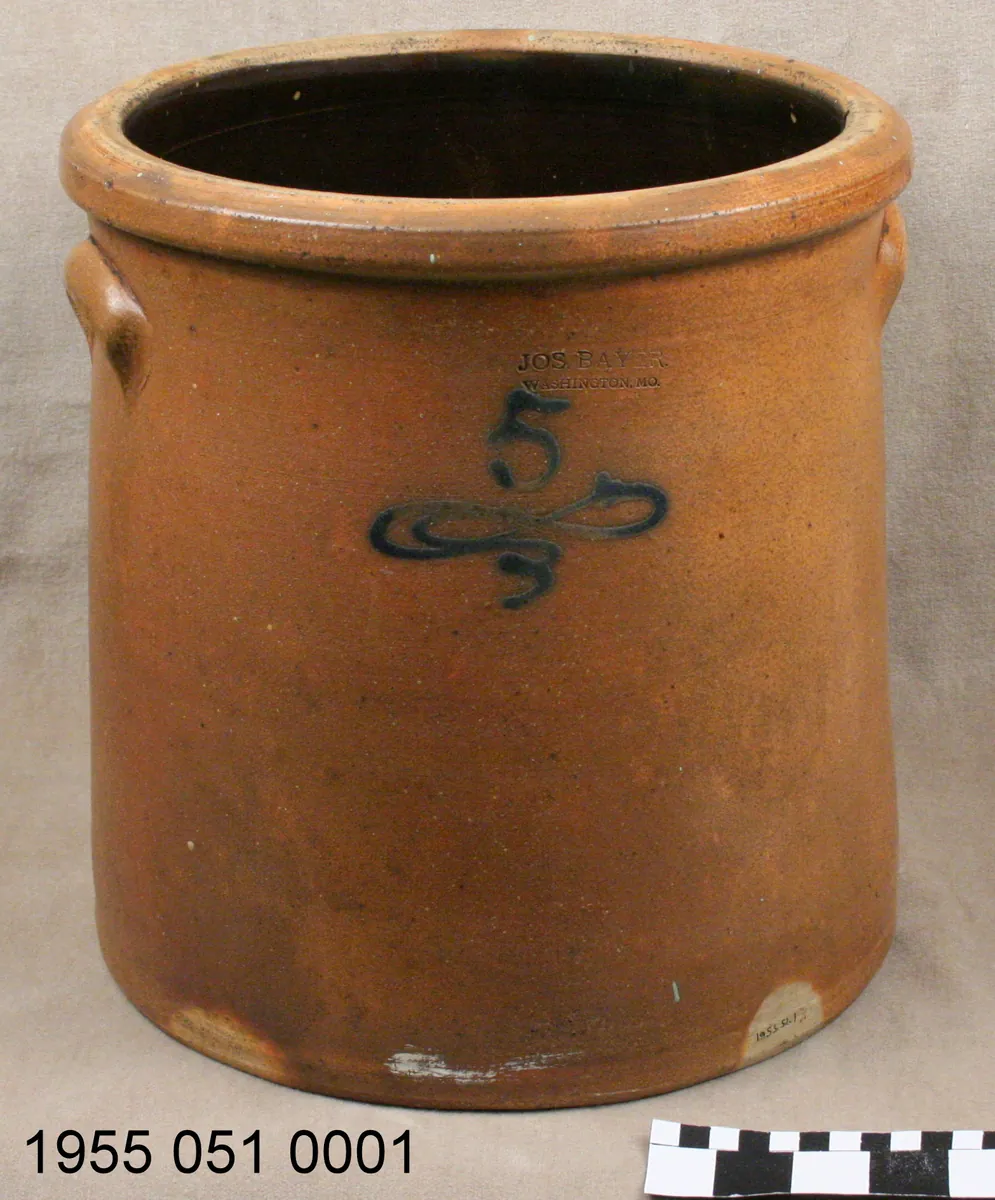
A large salt-glazed stoneware crock with a cobalt mark
Maker, decoration, size, and condition, including cracks, all move the price
A large antique stoneware crock with a painted capacity mark and a maker's mark. Marks, decoration, and damage usually matter more than the word “antique” alone. Photograph every stamp or incised mark, and be honest about hairlines or chips. Object photograph from the National Gallery of Art (Joseph Bayer). Public domain. Source: Large Stoneware Crock.jpg. See also photo credits.

How to identify maker, pattern or period
Photograph the whole object, the back or underside, any maker's mark, and a close view of how it was made. On furniture, look at drawer dovetails, saw marks, screws and nails, secondary woods, and the backboards. On ceramics, look at the factory mark and the paste. On metalware, look for hallmarks or maker's stamps. A printed "in the style of" label, or a piece that mixes machine-cut joints with a hand-worn surface, can be a later reproduction.
Family stories are clues, not identifications. "It's Victorian" or "it came from a farm" does not tell you the maker, the market, or whether the piece was cut down, refinished, or assembled from parts. Not sure what you have? Snap clear photos of the marks and the construction and the app reads them so you can start the ID. A formal appraisal for insurance or estate work is a different service from a first photo check.
Condition
Damage, missing parts, replaced hardware, later refinishing, and active woodworm or rust all change the range. A repair can be honest and still affect the listing you should compare. On furniture, look for replaced feet, cut-down legs, and veneer loss. On ceramics, look for hairlines, stapled repairs, and overpaint. On clocks or instruments, say whether the piece works. We will not invent a period price chart. The same table, chair, or vase can sit in very different ranges once condition and completeness are in the photo.
Listed versus sold
Antiques-shop tags and television appraisals are not sold prices for your piece. Regional taste matters: a form that brings interest in one city can sit unsold in another. Auction estimates are not hammers, and a retail asking price can sit well above a dealer-to-dealer figure. When we find enough listings, we show them so you can see the spread. If the match is weak, we label a rough estimate rather than inventing a precise number. See How we price.
For specific categories, use the closer guide after you have identified the object: how much is my furniture worth, how much is my china worth, or depression glass value.
Where to sell
People sell antiques through local auction houses, specialist dealers, antiques malls, estate sales, and eBay. Large furniture often sells better locally because of shipping. The app can draft a listing for eBay, Facebook Marketplace, or Gumtree. Measure the piece, say whether it comes apart for transport, and describe repairs plainly. A local auction specialist is often the better route for a clearly important object.
Scan and list
- Photograph the object, the marks, the construction details, and any damage or replaced parts.
- Confirm the maker or type if you can, and say what is original and what has been changed.
- Review the Worth about figure and the listed range when we find enough current public listings.
You can start with a free web scan in the box on this page. A scan is a first look at the object and at current listings, not a written appraisal for probate or insurance. If the piece looks like a reproduction, or if several periods have been mixed in one object, say so rather than listing it under a famous maker's name.
The app scans faster, keeps a history of your items and gives free weekly scans.
What makes How Much Is It Worth different
One photo is enough to start, and you can add up to two more angles. We identify the item first, you confirm or correct it, then we look up a Worth about figure and a listed range from current public marketplace listings. Those are asking prices, which can sit above what a piece finally sells for. You see the listings themselves when we find enough of them.
Coins and banknotes also draw on Numista. Trading cards use PokéWallet, with a source credit where that data appears. Gold and silver use a live metal price as a floor. If listings are thin, we show a clearly labelled rough estimate rather than inventing a precise number. The app can draft a listing for eBay, Facebook Marketplace, or Gumtree once you are ready to sell. For the short version of this process, read How we price.
FAQ
How much is my antique worth?
Antique value depends on identifying the piece first, then comparing current sold and listed comps for a similar object in similar condition. Age alone is not a price. Maker marks, construction, materials, and later alterations all matter. We will not invent a period chart.
How do I identify the maker or period?
Photograph the whole object, the underside or back, any maker's mark, and how it was made. On furniture, look at dovetails, fasteners, and secondary woods. Family stories are clues, not identifications. Snap those photos and the app can start the ID from the marks and construction.
Does damage matter?
Yes. Missing parts, replaced hardware, later refinishing, hairlines, and repairs all change the listings you should compare. An honest repair is still a repair. Say what is original and what has been changed.
Can I scan an antique with the app?
Yes. Photograph the object, the marks, and any damage, then confirm the type if you can. A scan is a first look at the object and at current listings, not a written appraisal for probate or insurance.
Related guides
Updated 11 November 2026. Written by Harris, who built How Much Is It Worth. Figures that we cite include a source and a date. They are not a certified appraisal. See How we price.
The app scans faster, keeps a history of your items and gives free weekly scans.
See all guides on the homepage, or read how we price.