Pocket watch value depends on the maker, the movement, the case, and whether the watch still runs. A gold-filled hunter case and a solid gold one are not the same object, and a stopped movement changes the market. Photograph the dial, the case, and any marks inside the case back, then compare current public listings.
The app scans faster, keeps a history of your items and gives free weekly scans.
Example
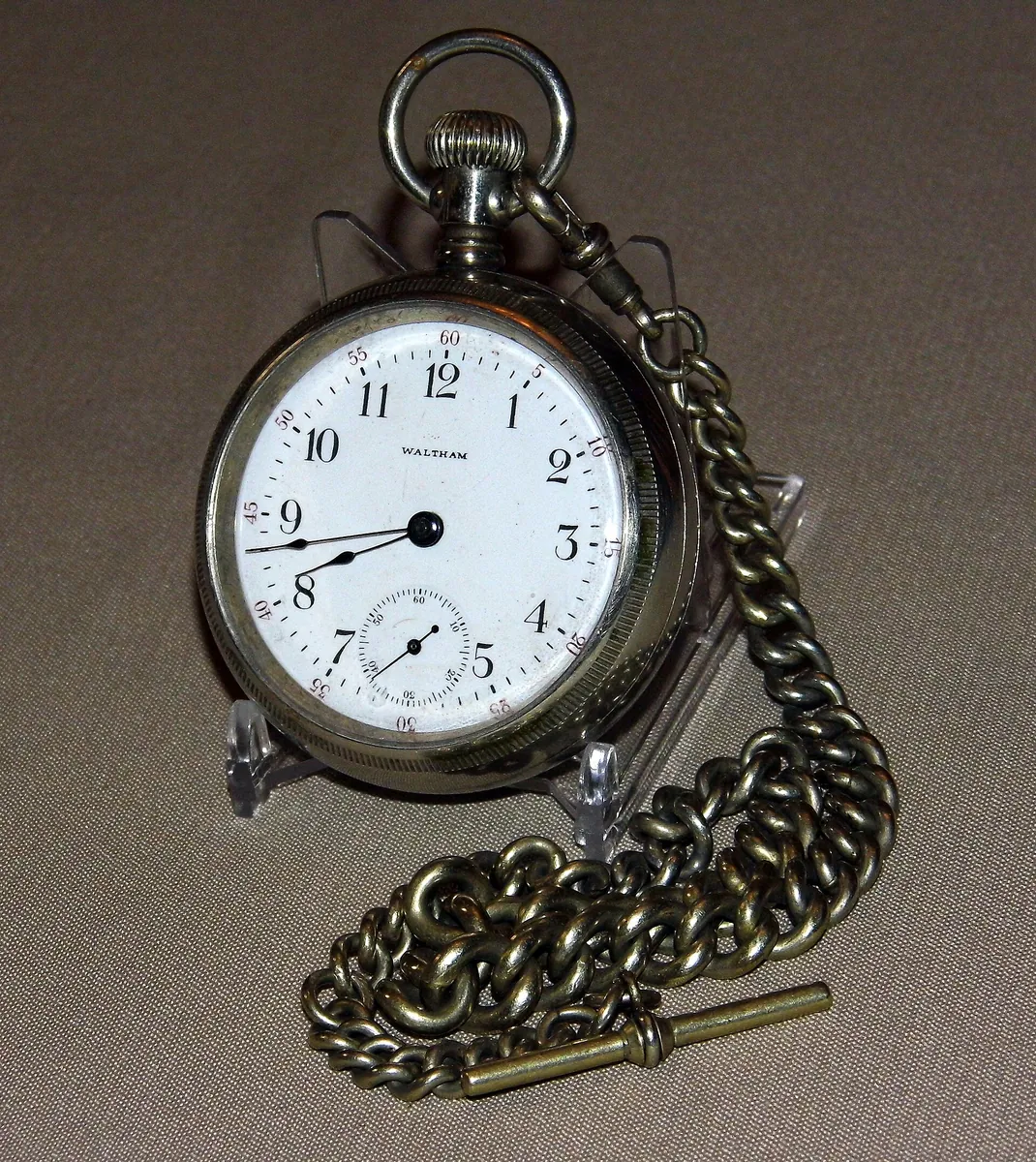
A vintage Waltham open-face pocket watch with chain
Maker, movement grade, case, and whether the watch runs all move the price
A vintage American Waltham open-face pocket watch, size 18, with a chain, in an Illinois Watch Case Co. case. The movement serial, jewel count, and case metal usually matter more than the case engraving alone. Photograph the movement, the cuvette, and any case marks. Photo: Vintage American Waltham Open Face Pocket Watch with Chain, Size 18, Case Engraved Illinois Watch Case Co., Nickel Elgin, U.S.A. (10424537644).jpg by Joe Haupt, licensed under CC BY-SA 2.0, via Wikimedia Commons. See also photo credits.

Identify brand or hallmark
Open the front carefully if it is a hunter case, and photograph the dial, the hands, and any name on the movement once you have the back off, or a clear shot of the cuvette if you would rather not force a tight cover. American makers such as Waltham, Elgin, Hamilton, and Illinois often signed the movement. English and Swiss watches may be signed on the dial, the movement, or both. A case maker is not always the movement maker.
Look for hallmarks or karat marks in the case back: 14k, 18k, 0.375, 0.750, and similar fineness stamps, or a gold-filled or rolled-gold mark. Gold-filled cases have only a layer of gold over a base metal. They should not be priced as solid gold. If you find a solid-gold mark, weight and fineness still come first. NGC's melt-value table, updated 10 November 2026 at 6:30 p.m. Eastern, listed a gold ask of $4,037.80 per troy ounce. That snapshot is a metal floor for the gold in a solid case, not a collector price for the watch, and not a live quote. A scrap payout is often below a simple melt, and a running, collectible watch can sit well above melt. See how much is my jewelry worth for hallmarks, and how much is my watch worth for wristwatches.
Not sure which mark you have? Snap a photo of the case back and the dial and the app reads those details so you can confirm them.
Condition and completeness
Does it run, and does it keep reasonable time? A watch that ticks when you wind or shake it is a different listing from one that is frozen. Do not force a tight winding stem. Note missing hands, a cracked porcelain dial, a dented case, or a repaired bow. A chain, box, or paperwork helps when you still have it, but a later chain does not turn a common movement into a rarity.
Railroad-grade watches were built to a standard and often have extra marks or a particular movement. That is worth recording, but it is not an automatic premium without the right movement and condition. We will not invent a railroad-watch price list.
Listed versus sold
Asking prices for "antique gold pocket watches" are often based on the case colour alone. Sold prices usually follow the movement, the case metal, and whether the watch runs. When we find enough current public listings, we show them so you can see the spread. If listings are thin, we label a rough estimate rather than inventing a precise number. See How we price.
Fakes and later parts
Dials get refinished, cases get remarried to the wrong movement, and "gold" cases are sometimes brass with a worn wash. A famous name on a cheap, unsigned movement is a warning. Compare fonts, finish, and the way the case sits on the movement with known genuine examples if a lot of money is at stake. A photo is a first look, not a workshop authentication.
Where to sell
A running, identified watch can be listed on eBay or sold to a watch dealer or a jeweller. Local pickup avoids shipping a delicate piece. The app can draft a listing for eBay, Facebook Marketplace, or Gumtree. In the UK, Australia, or Canada, hallmarks follow local assay rules; the NGC gold ask cited above is a US dollar snapshot. A jeweller's offer for a gold case may be a scrap figure, not a collector sale.
Scan and list
- Photograph the dial, the closed case, and any marks inside the case back or on the movement.
- Confirm the maker, any fineness mark, and whether the watch runs, then edit anything that looks off.
- Review the Worth about figure and the listed range when we find enough current public listings.
You can start with a free web scan in the box on this page.
Do not dip a dirty movement in household cleaner to "improve" a photo. Leave it as it is, and mention cracks or repairs honestly. A scan is a first look at the maker and the case, then at current listings for a similar watch.
The app scans faster, keeps a history of your items and gives free weekly scans.
What makes How Much Is It Worth different
One photo is enough to start, and you can add up to two more angles. We identify the item first, you confirm or correct it, then we look up a Worth about figure and a listed range from current public marketplace listings. Those are asking prices, which can sit above what a piece finally sells for. You see the listings themselves when we find enough of them.
Coins and banknotes also draw on Numista. Trading cards use PokéWallet, with a source credit where that data appears. Gold and silver use a live metal price as a floor. If listings are thin, we show a clearly labelled rough estimate rather than inventing a precise number. The app can draft a listing for eBay, Facebook Marketplace, or Gumtree once you are ready to sell. For the short version of this process, read How we price.
FAQ
How much is a pocket watch worth?
Pocket watch value depends on the maker, the movement, whether the case is solid gold or gold-filled, and whether the watch still runs. A gold-coloured case is not automatically solid gold. Photograph the dial and any marks in the case back, then compare current public listings.
Does a gold case mean it is worth melt?
Only a solid-gold case has a metal floor, and even then a scrap payout can sit below a simple melt. Gold-filled cases have only a layer of gold. NGC's melt-value table, updated 10 November 2026 at 6:30 p.m. Eastern, listed a gold ask of $4,037.80 per troy ounce. That is a dated snapshot, not a collector price for the watch.
Should I wind a stopped watch to test it?
Be gentle. If the stem is tight or the watch has been sat for years, forcing it can do damage. If it already runs, say so. If you have not tested it, say that too, rather than guessing.
Can I scan a pocket watch with the app?
Yes. Photograph the dial, the case, and any marks inside the case back, then confirm the maker and whether it runs. We look at current public listings and use a metal-price floor only where a solid precious-metal case applies. See How we price.
Related guides
Sources
- NGC, Coin Melt Values, updated 10 November 2026 at 6:30 p.m. Eastern. Gold ask $4,037.80 per troy ounce, cited as a metal-floor snapshot for solid-gold cases only, not as a collector price for a watch.
Updated 11 November 2026. Written by Harris, who built How Much Is It Worth. Figures that we cite include a source and a date. They are not a certified appraisal. See How we price.
The app scans faster, keeps a history of your items and gives free weekly scans.
See all guides on the homepage, or read how we price.